Quick Facts:
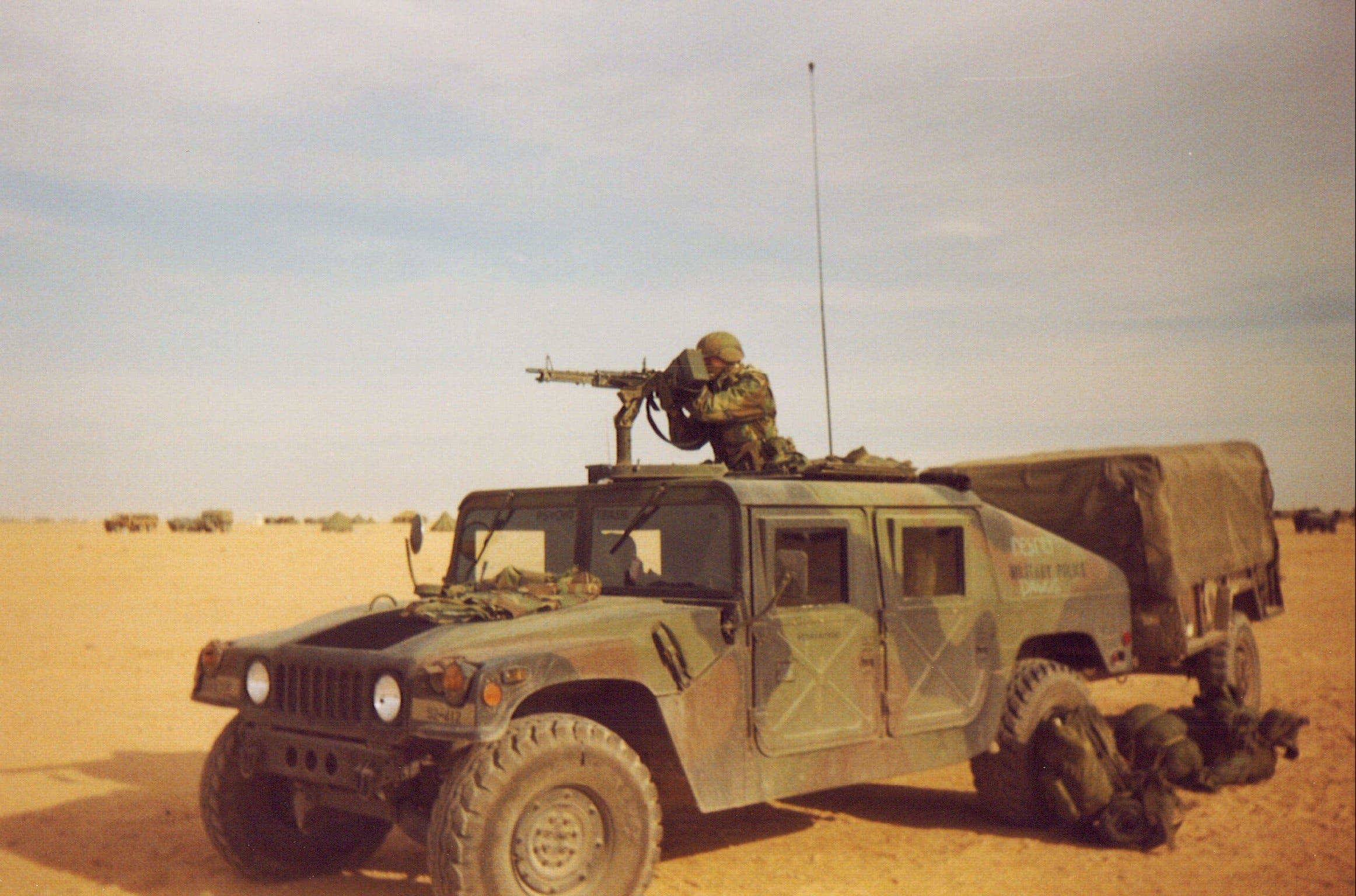
Military Branch/Service: U.S. Army, Military Police; medically retired after Desert Shield/Desert Storm
Current Gaming Role: Chief Technology Officer, Umpqua Indian Development Corporation (Cow Creek Band of Umpqua Tribe of Indians), Roseburg, Oregon
Favorite Military Travel Location: The west coast of Jutland, Denmark
Military Service Summary
Richard joined the U.S. Army at 18 to pursue law enforcement and completed military police school at Fort McClellan, Alabama, then patrolled 22 installations and housing areas around Darmstadt, Germany. In late 1990, his unit, the 92nd Military Police Company, deployed for Desert Shield/Desert Storm, breaching the berm with the 3rd Armored Division and taking, securing and transporting prisoners of war. After the ceasefire, he ran checkpoints on Highway One in Iraq and guarded a POW camp. A fall into an unmarked vehicle pit caused a serious spinal injury that led to his medical retirement and ended his law enforcement career.
🤝 Mentorship & Influences
Staff Sergeant Michael Freeman, his squad leader in Germany, taught him to accomplish the mission while taking care of the soldiers. That lesson still shapes how Richard leads. It’s not you and it’s not your equipment that makes you successful. It’s the people.
🎰 First Role in Gaming
Richard’s tech career began when he replaced two to three weeks of monthly crime prevention paperwork with a Lotus 1-2-3 spreadsheet that did the job in a day. The data also drove crime analysis: one report showed property crimes spiking whenever a certain unit went to the field, and undercover officers caught the culprits the first night.
After earning his degree, he wrote AutoCAD code for a steel manufacturer and worked as a factory automation engineer at Hewlett-Packard. A headhunter’s call then brought him to IGT Systems (then Acres), writing casino management software. He earned his first patent there and led seven engineering teams building a smart card cashless system for Tsogo Sun in South Africa that let players move funds between machines even when back-end systems went down.
Since 2011, he has led technology at the Umpqua Indian Development Corporation, home of Seven Feathers Casino Resort. He holds three tribe-owned patents, with a fourth pending, and built Progressive Pulse, which reads digital progressive meters remotely. He also teaches computer science at the local community college. For Richard, the mission means more in tribal gaming: the wealth it creates funds healthcare, dental care, elder stipends and education for tribal members.
💡 Advice for Fellow Veterans
Volunteer for new installations. Nobody in gaming knows it all, and every new skill makes you more valuable, whether you stay an individual contributor or move into leadership. And respect the chain of command: when everyone is kept in the loop, nobody is surprised.
Richard’s hope: that more veterans join the group and support each other.
Listen and watch our short interview
Thank you Richard for your service to the nation!